Today’s “Women in Wakefield” profile is on Hannah Hemingway Wakefield; her biography shows a bit about how women were educated and gives a peek into one of the town’s first institutions of higher learning, the South Reading Academy.
Hannah was Cyrus Wakefield’s sister, eight years younger, she was born on the family farm in Roxbury, NH in 1820.
When Hannah was a young girl she had the opportunity to study at a school for young women in Charlestown, but later would transfer to the South Reading Academy.
The town that is now known as Wakefield was then called South Reading. The South Reading Academy was an institution sponsored by the Baptist denomination, and originally intended as an introductory school to the Theological Seminary in Newton, but later was also opened up to other students. At the time, this was the only institution above grammar schools here in this town.
The South Reading Academy was opened in 1829 but, after donations fell off, it was forced to close in 1846, and was sold by to the town of South Reading, where it soon came into use as the first building used by the institution now known as Wakefield High School. The building stood originally on Lincoln Street (site of the Lincoln Schoolhouse), but was later moved to Foster Street, where it still stands as 7 Foster Street. (At one time it was also the G.A.R. Hall for the H.M. Warren G.A.R. post.)
But I digress — the reason the South Reading Academy was important to this story is that it was a visit to his sister Hannah at the South Reading Academy that first brought her big brother Cyrus to the town that he later fell in love with — and to which he moved his burgeoning Rattan business.
Hannah Hemingway Wakefield later married Joel Greenwood and moved away to Providence Rhode Island with her husband, a Baptist preacher and penmanship teacher. Upon his death, she married Edwin Sawyer and later still moved back here to Wakefield, MA.
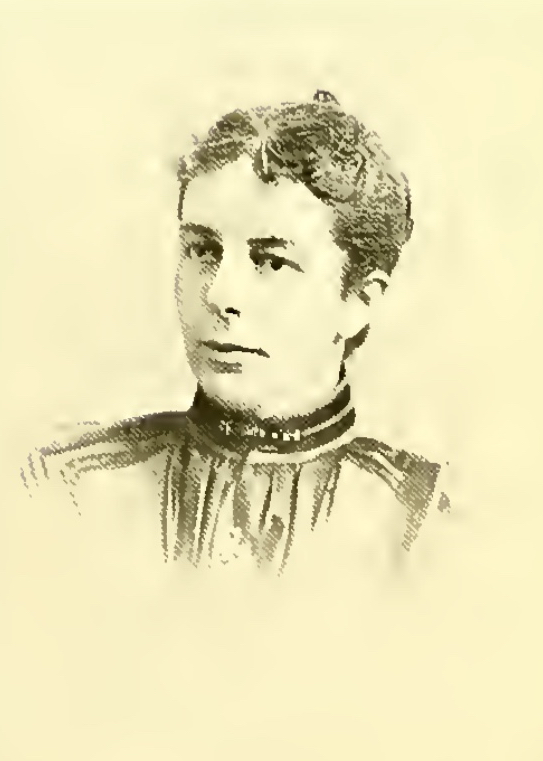
Hannah, like her brother Cyrus, valued schools and education. (Had Cyrus lived longer., he had dreamed of establishing “Wakefield University” here.). Her daughter Eliza Greenwood was a significant woman in Wakefield’s history as well — she studied music and taught at WHS for a while; she later served on the school committee for 12 years and was a lifelong member of the First Baptist Church of Wakefield. (Eliza’s photo is found below.)
“Women in Wakefield” is a March feature of the Wakefield Historical Society, celebrating women who helped to shape our town, and whose stories reveal the town’s history. One new story is featured every day and will be posted on our website http://www.wakefieldhistory.org. Many are also featured in the Wakefield Daily Item.
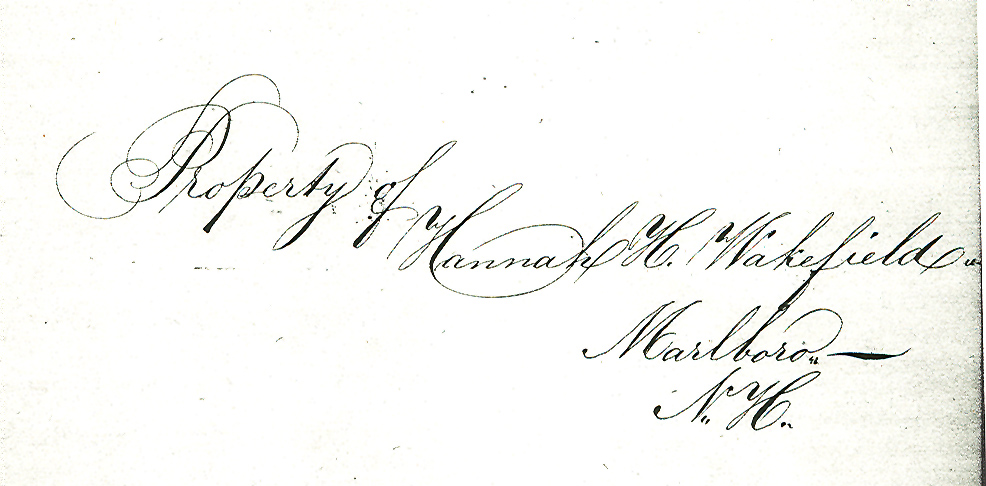
** The hand writing sample is taken from Hannah’s diary, which sold on eBay, believe it or not. The buyer later contacted us and kindly sent us some photocopies of the diary. (We could not convince her to donate it to us!)


 Wakefield Historical Society