Today’s “Women in Wakefield” profile is one that was only recently discovered. It focuses on Miss Sophia Knight.
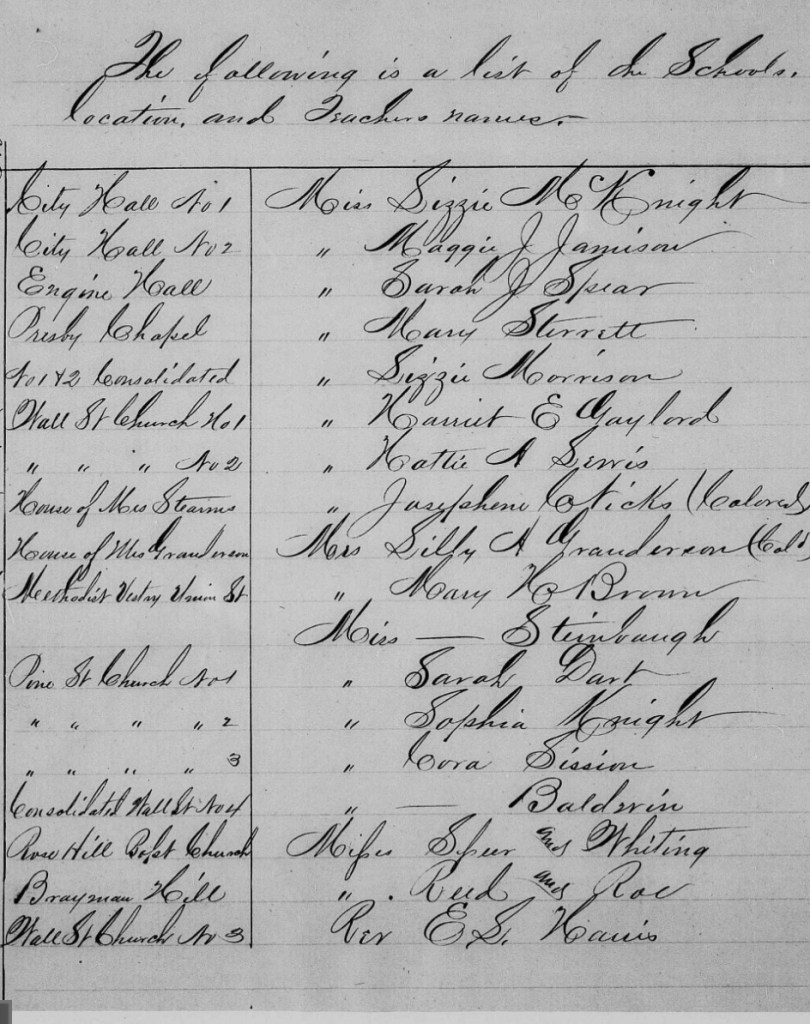
Sophia Knight was born in 1820 and by the 1860 Census, she was living with her family in South Reading. When the war broke out, she determined to devote herself to help the “freedmen.”
Remarkable among women at the time, 44-year old Miss Knight traveled to the Benton Barracks Hospital where she worked from May until October 1864. Then she went to Natchez, Mississippi where she was engaged as a teacher of the “freedmen” under the direction of the Western Sanitary Commission. Not content with only teaching children, she also visited black soldiers in the fort and traveled to visit people in their homes and the hospitals for the sick and wounded black soldiers.
She remained in Natchez until May, 1865 and then accepted an appointment from the Western Sanitary Commission, where she continued to labor for the relief of freedman. she went to Natchez, Miss., and remained there in Natchez until May, 1865. The following autumn she accepted an appointment from the New England Freedman’s Aid Society as teacher of the Freedmen in South Carolina, on Edisto Island, where she remained until July, 1866, she then returned to Boston, where she continued to engage in teaching freedmen.
By 1876, she had established an independent kindergarten in Boston which was described as “lovely” with “orderly and spirited animation.” Sadly, although the school was busy Miss Knight needed either more students or more funding in order to keep it going.
In her later years, she found a residence in Waltham near her niece whose family visited her on her 100th birthday, finding her ‘very energetic’ and fond of reading. (She could read without glasses, the chronicler noted!) Through her kindness, the local library was gifted many interesting and valuable books.
“Women in Wakefield” is a feature of the Wakefield Historical Society’s ongoing research into the town’s historic past. During the month of March, “Women’s History Month,” we focus on some of the historic women who reveal the times they lived in, and who helped to shape the character of our town. All profiles are shared on our social media sites, and on our blog on ‘wakefield history.org.” Many are being shared through the courtesy of the Wakefield Daily Item.


 Wakefield Historical Society